Something pulls in the back of your thigh. Within a day you are on the floor reaching for your toes, trying to loosen it off. That is the instinct, and it is the single thing most likely to set you back.
A strain is a tear, even a small one. Pulling on a healing tear feels productive because it feels like something, but early aggressive stretching does not speed anything up and can disturb tissue that is trying to knit. That tight feeling is not shortness. It is the injury.
What helps is graded loading, on somebody else’s timetable. And in the meantime, everything else.
The Whole Session in One Picture
Screenshot this. Send it to a team-mate. Take it to the court.
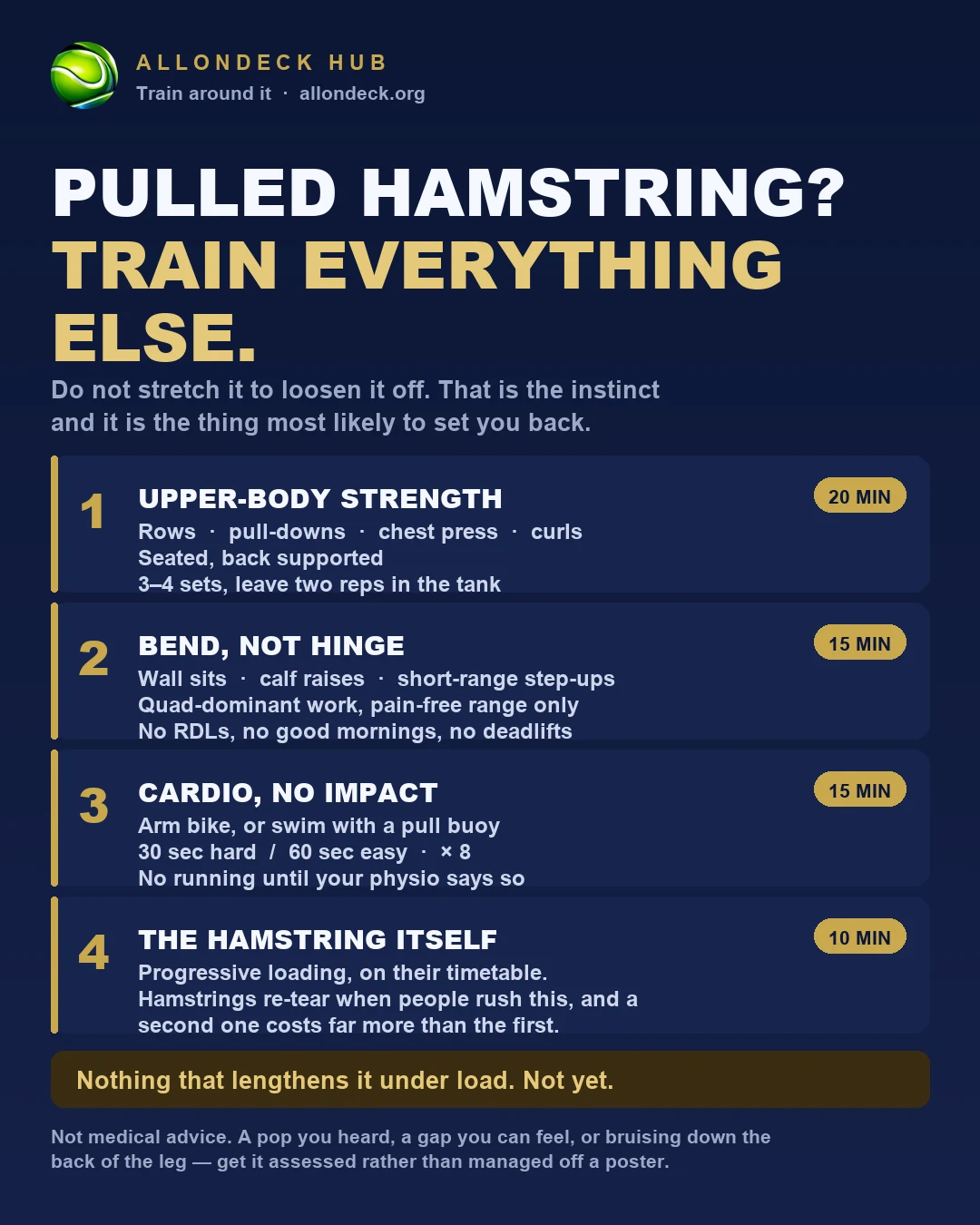
The Four Blocks
Upper-body strength
20 MINSeated, back supported, so nothing pulls on the leg.
- Rows
- Pull-downs
- Chest press
- Curls and triceps
- 3–4 sets, leaving about two reps in the tank
Bend, not hinge
15 MINThe exact mirror of the knee session. There, hinging spared the knee. Here, bending spares the hamstring.
- Wall sits
- Calf raises
- Short-range step-ups, if pain-free
Cardio, no impact
15 MINArm bike, or swim with a pull buoy between your legs so the leg does nothing.
The hamstring itself
10 MINProgressive loading, staged, on their timetable.
- Hamstrings re-tear when people rush this stage
- A second tear typically costs far more than the first
Why the Second One Is Worse
Re-injury is the defining problem with hamstrings. A player feels fine walking, feels fine jogging, stretches for a ball at eighty per cent in week three and goes again — and the second one is usually bigger, slower and more stubborn than the first.
The reason is that feeling fine and being ready are different states. Pain disappears long before strength returns, particularly at the long end of the range, which is exactly where sprinting and lunging load it. That gap is where players get caught.
What Being Ready Looks Like
Not “it does not hurt any more”. Closer to: strength that matches the other leg, no pain at the long end of the range, and a graded return to running already completed and tolerated before you go near a court.
Your physio will have tests for this. Ask what they are and what your numbers were, so you are aiming at something instead of guessing from feel.
Read This Before You Start
This is a general conditioning session, not medical advice, and it is not a diagnosis.
Get it looked at first
A pop you actually heard, a gap you can feel in the muscle, significant bruising down the back of the thigh, or not being able to walk properly — those point at a bigger tear and need assessing rather than managing. Pain right up at the sitting bone deserves proper attention too, because that end of the hamstring is slow and easy to get wrong.
The Point of All This
You are not going to rush the hamstring. That part is decided. What you can decide is whether you come back in six weeks fit, strong and sharp — or six weeks unfit, on top of a leg that still needs rebuilding.
Patience is cheaper than a second tear. It always has been.
Train around the injury with a coach who knows the sport
AllONDECK coaches build sessions around what you can do, not what you cannot. Find one near you, or work remotely.